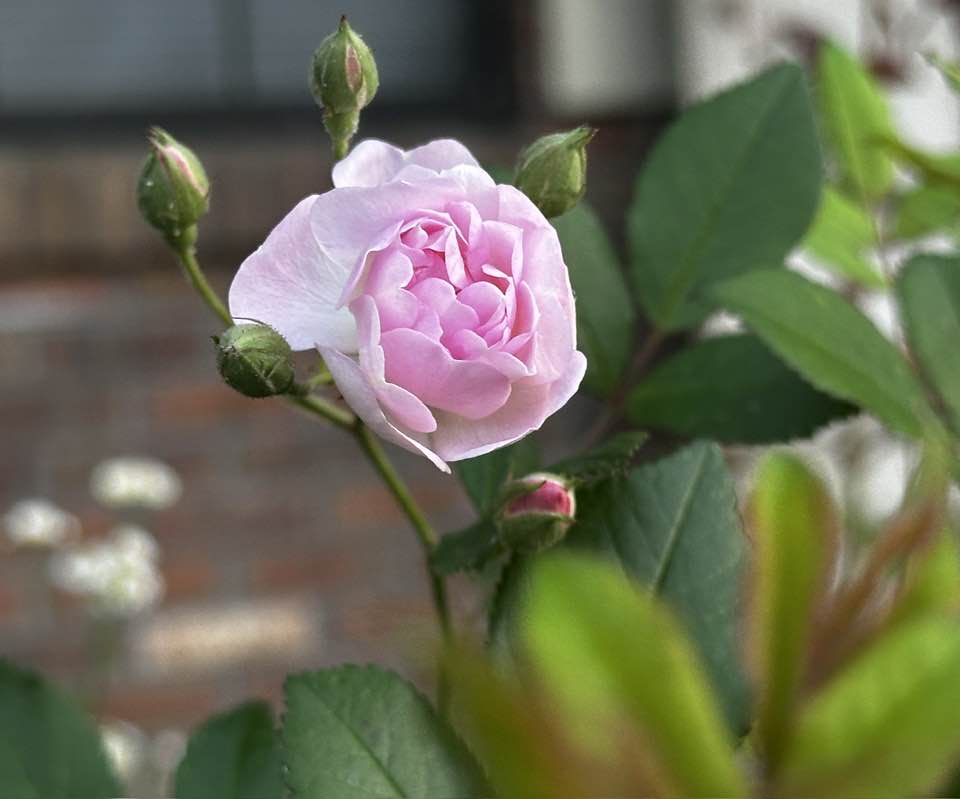
The Fairy is disease resistant, and she is a rampant repeat bloomer. My Fairy Rose is a wonder. For that reason, I feel sure that this rose will be easy to propagate.
How long after I propagate The Fairy Rose before she produces roots?
- Initial Rooting: In optimal conditions (warmth and high humidity), roots can appear in as little as 10 to 14 days.
- Active Growth: By roughly 4 to 6 weeks, the cuttings should have established a strong enough root system to be transplanted into larger pots.
- Conditions for Success: Using softwood cuttings (new, flexible growth) in late spring or early summer leads to the fastest rooting times. Using rooting hormone and providing a humid environment (like a plastic bag or cover) helps speed up the process.
- Signs of Rooting: You can gently check for roots around the 3-4 week mark by giving the cuttings a light tug to feel for resistance.” Google AI
How long after I propagate The Fairy Rose before she blooms?
“The flowering stage is a thrilling time for any gardener. Typically, the first blooms of the Fairy Rose appear about 10 to 12 weeks after planting.
“During this period, you can expect a peak flowering duration of 4 to 6 weeks, where the garden bursts into color and fragrance.
“As the Fairy Rose transitions from vegetative growth to the reproductive phase, you’ll notice significant changes. The plant shifts its energy focus, allocating more resources to flower production.
“This shift often results in reduced leaf growth, as the plant prioritizes blooming over foliage. It’s a fascinating transformation that highlights the plant’s natural life cycle. . . .
“The Fairy Rose reaches full maturity in approximately 6-8 months from seed or cutting. This relatively quick maturation period makes it an appealing choice for gardeners eager to see results.” Greg App
Peggy Martin Rose
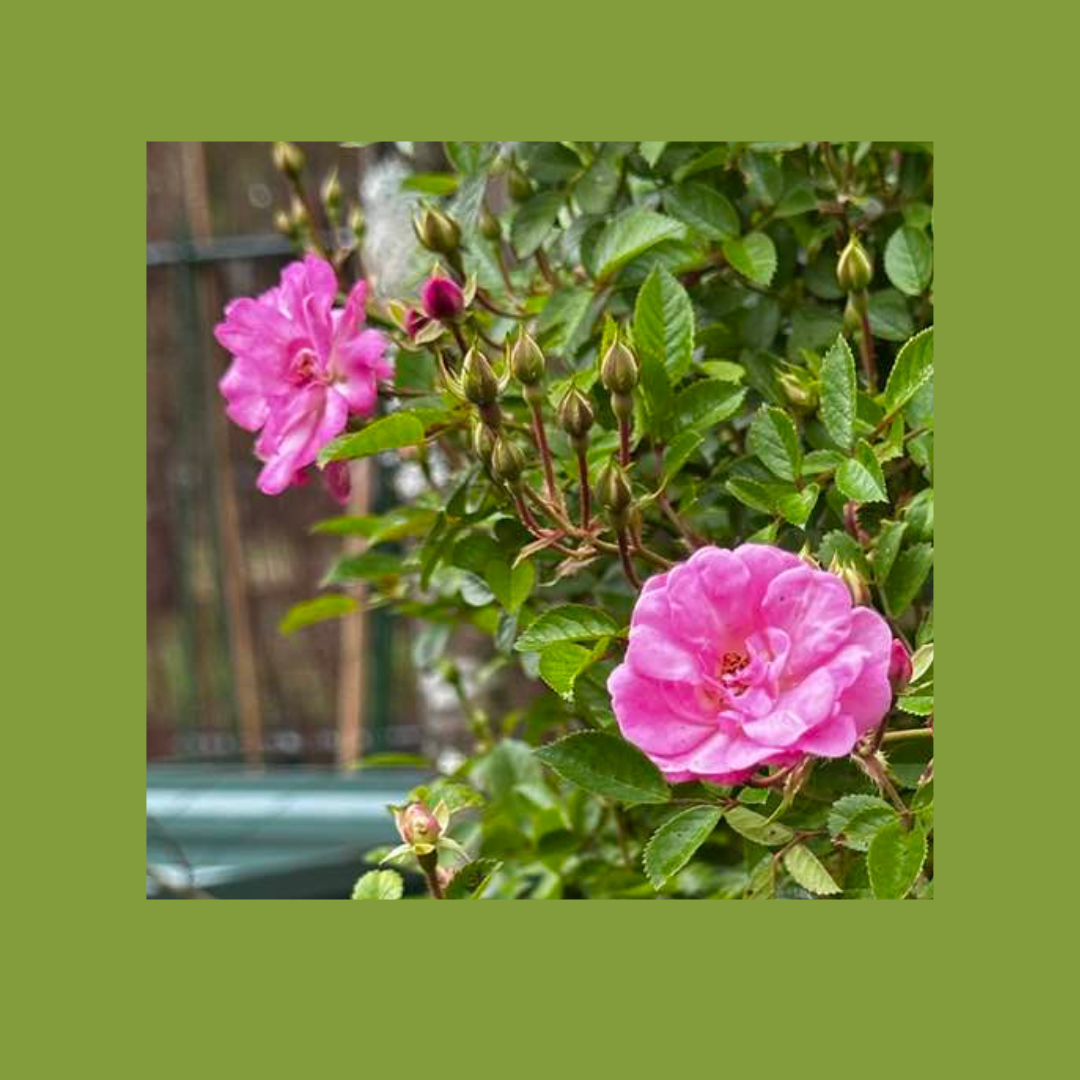
Peggy Martin Rose – Jacki Kellum Gardens
I’ll also propagate my Peggy Martin Rose – No other rose in my garden is as prolific as Peggy Martin.
The following video shows the extent of Peggy’s growth after only 18 month of growth.
Mutablis Rose
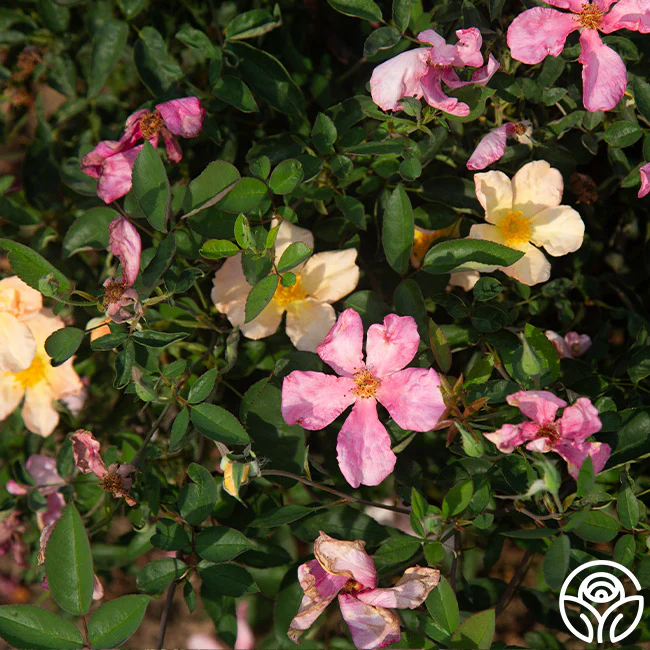
Mutablis Rose – Image Credit Heirloom Roses
I have grown Mutablis Roses several times. She is delightful.
Date Introduced: Before 1894
Type: China Rose
Color: Pink, Cream, and Light Yellow
Fragrance: Lightly Fragrant
Size: 4′ – 5′ The last time I grew Mutablis it grew to be about 20′ tall; It wrapped itself in wisteria and climbed up and over my back deck. Glorious Sight.
Rebloom: Continual Blooming
Has Vicious Thorns
“Mutabilis is a beautiful and unusual China Rose with a name meaning literally “liable to change.” The pointed buds open into single, 3” blooms with 5 simple petals that ebb and flow through a series of color changes. Mutabilis begins yellow aging to coppery orange, to rich pink, and ending with fiery red. With various blooms in different stages, expect Mutabilis to show off multiple colors at once. Her delicate, open blooms resemble sweet butterflies giving the garden a whimsical feel. She is an outstanding, continually blooming shrub that is vigorous and blooms early.” Heirloom Roses
Honorine de Brabant
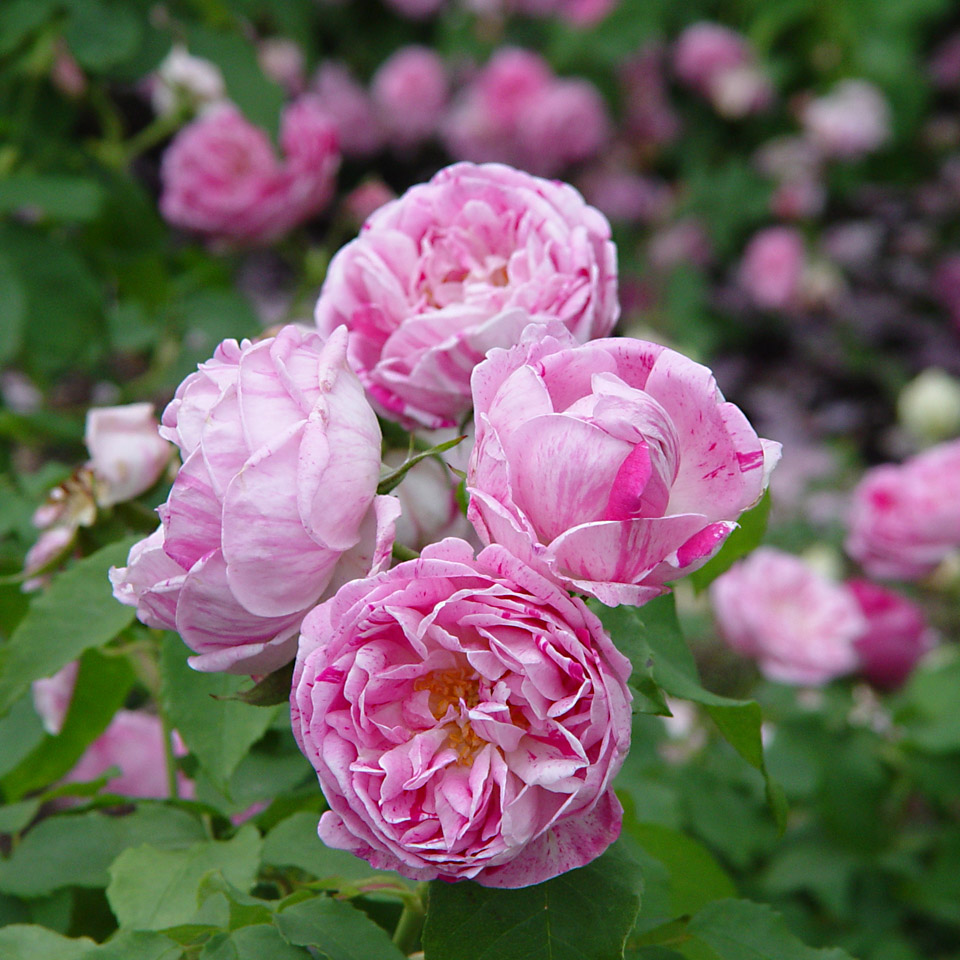
Image Credit: Wikimedia
A list of other roses that I hope to soon acquire–to use as propagators:
- China Roses: ‘Ducher’, ‘Louis Philippe’, ‘Comtesse du Cayla’, ‘Mutabilis’, ‘Archduc Charles’.
- Tea Roses: ‘Mdm Antoine Mari’, ‘Monsieur Tillier’, ‘Duchesse de Brabant’, ‘Mrs. Dudley Cross’.
- Other OGRs: ‘Sidonie’, ‘Marchesa Boccella’, ‘Yolande d’Aragon’, ‘Leander’ Google Ai
China Roses
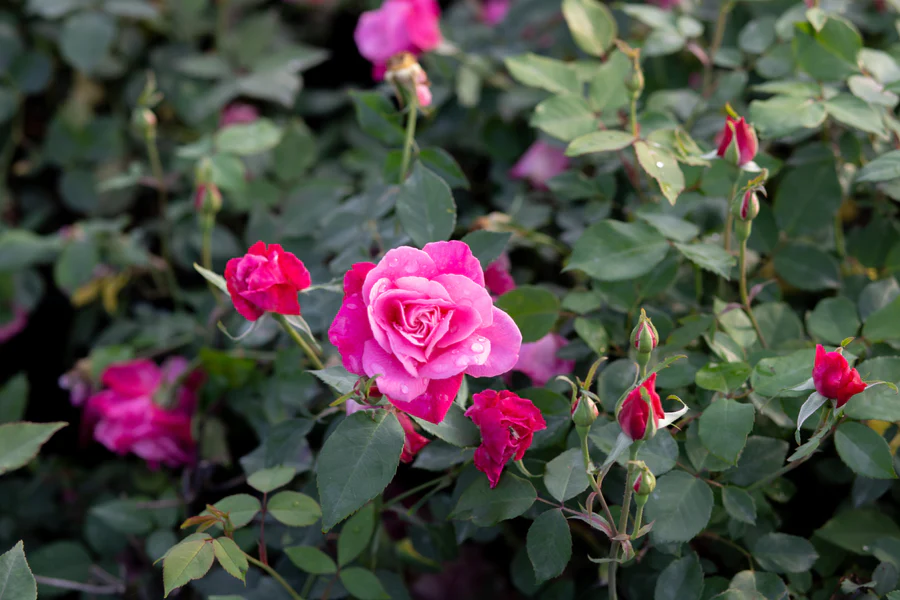
Image Credit: Antique Rose Emporium
Archduc Charles [Archduke]
Prior to 1837
3 to 5 feet
“Thomas Rivers called ‘Archduke Charles’ “changeable as the chameleon”. The full, very shapely flowers open with crimson outer petals and neat pink centers, then darken to solid crimson. The heat of the sun speeds the process: what appears to be a bi-color hedge in spring and fall will be all red roses in mid-summer. The neat, erect bush and constant bloom help make this one of our most popular varieties.” Antique Rose Emporium
Repeat Bloom
Fragrant
Comtesse du Cayla
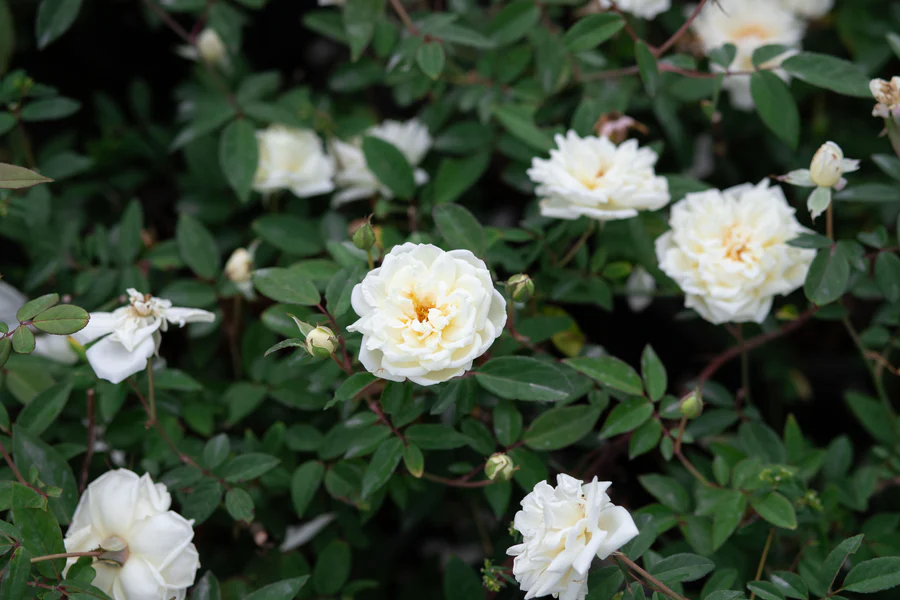
Image Credit: Antique Rose Emporium
Ducher
1869
3 to 5 feet
“Regarded as the only white China rose, ‘Ducher’ blooms a soft ivory-white for us. The buds are very round and sometimes have a hint of pink on the outer petals opening to a delicate swirl of fragrant ivory petals. Smaller than many Chinas, this is a good candidate for a container. Although it exhibits the typical bronzy new growth, the foliage of ‘Ducher’ is uncharacteristically light green.” Antique Rose Emporium
Repeat Bloom
Fragrant – Fruity, Like Bananas0
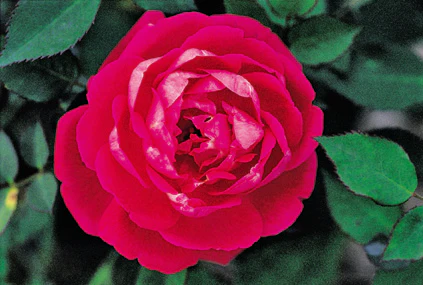
Image Credit: Antique Rose Emporium
Louis Philippe
1834
3 to 5 feet
“The flowers are double, deep crimson with a touch of blush at the center and like all old Chinas exhibits an occasional white streak through the petals. This rose is often confused with ‘Cramoisi Superieur’. The only differences we can detect is that ‘Louis Philippe’ is more compact and the color varies. Emily de Zavala, wife of Lorenzo de Zavala, Mexican minister to France, 1834-35, loved the roses at King Louis Philippe’s court. The de Zavalas came to Texas in 1835 to support the Texas Revolution. On their land across from the San Jacinto Battleg ‘Zavala rose.'” Antique Rose Emporium
Repeat Bloom
Fragrant – Old Garden Rose Fragrance
Tea Roses
 |
|
Image Credit: Antique Rose Emporium
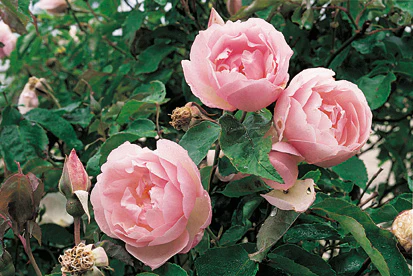
Duchesse de Brabant
1857
4 to 6 feet
Teddy Roosevelt made ‘Duchesse de Brabant’ his favorite, often wearing a bud or flower as a boutonniere. It is very nearly our greatest favorite, too. The cupped pink flowers have a cabbagey roundness to them, as if they were picked from a luscious old rose painting.
Repeat Bloom
Fragrant – Old Garden Rose Fragrance
Discover more from Jacki Kellum
Subscribe to get the latest posts sent to your email.