I suppose that I have watched every cinematic version of Jane Austen’s novel Pride and Prejudice, but from the very first seconds of the 2005 version, I felt that the Keira Knightley film was the best production.
The rising sun in the video clip above, paired with the 2005 theme song sets the mood for the perfect Pride and Prejudice Movie. This film is nothing short of glorious–again and again.
Indeed, I have watched the Keira Knightley movie several times. This is coming from an old cynic who has soured on love and who typically avoids romance books and movies. While watching the 2005 movie, I ask myself why this movie succeeds where most romance movies nauseate me, and I have come to the following conclusion: The 2005 version of Jane Austen’s Pride & Prejudice is convincing and it manages to rekindle a spark of hope in the worst of us romance skeptics.
Part One: Pride & Prejudice is also witty. I hate nothing more in movies than unconvincing comedy, but Pride & Prejudice is certainly not unconvincing, and I found myself chuckling several times. This movie is delightful. Among other things, the film is perfectly cast.
All of the daughters and Mr. and Mrs. Bennet are played perfectly:
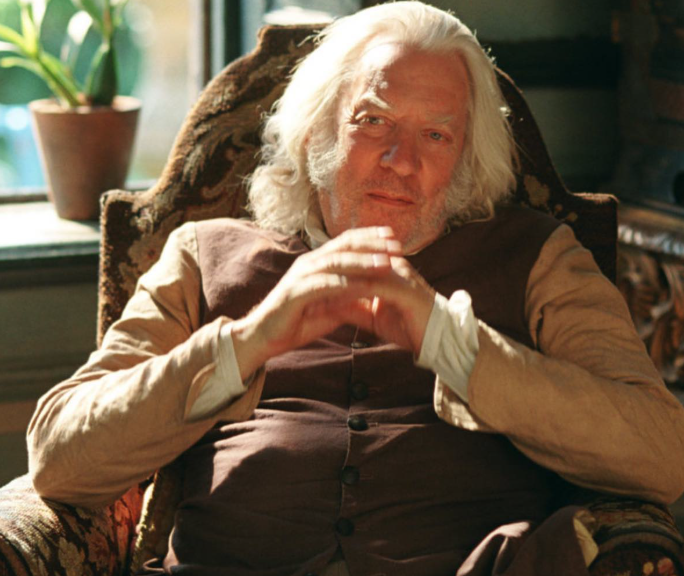
Donald Sutherland as Mr. Bennet
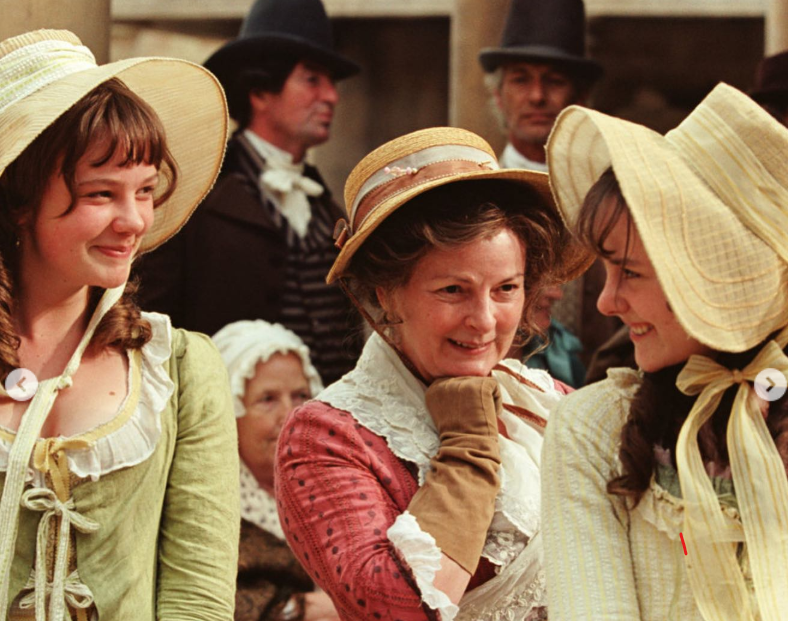
Brenda Blethyn as Mrs. Bennet, with the youngest daughters.
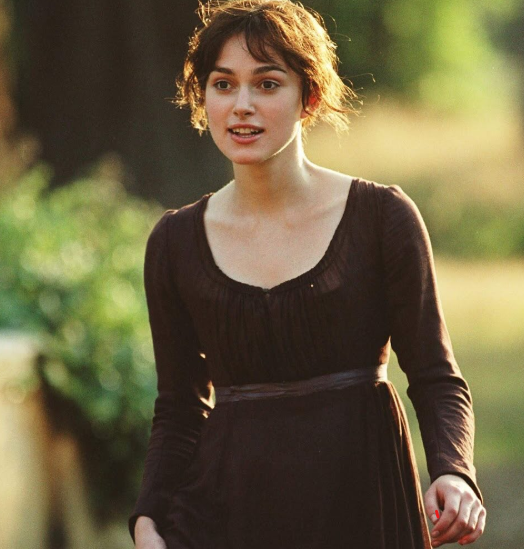
Elizabeth or Lizzie is the second daughter, and Keira Knightley masterfully captures this beauty’s character. Unlike her older sister, Lizzie is a bit willful and outspoken. A very independent female myself, I love Elizabeth Bennet, but at times, she makes me uncomfortable, as she so perfectly and succinctly speaks her mind. Elizabeth allows us strong females to see how very closely that we often hug the line when we say more than we should. In Elizabeth, I saw some of my own good qualities and some that are less desirable, and that is no doubt the secret to good character development. Compelling characters are a mix of good and bad.
In the above scene, Darcy questions Elizabeth, “Do you talk as a rule while dancing?”
Elizabeth returns: “No, No, I prefer to be unsociable and taciturn. It makes it all so much more enjoyable. Don’t you think?”
It is perfect that Darcy and Elizabeth play out this difficult conversation while weaving in and out of a formal dance. This sets the tone for the awkward sparring that pervades the beginning of their lack of relationship.
” In many of the previous versions of “Pride & Prejudice”, the movie belonged to the actor playing Mr. Darcy. In this one, the movie belongs to Lizzie. …
“When you read the book, the story is definitely told through Lizzie’s eyes. That was one of the first things that Joe [Wright, director] said is that we really wanted this through Elizabeth’s eyes, so you fall in love with Darcy as she does, so you hate him at the beginning and you gradually change your mind. So yes, I think that was a conscious thing. Also, if you’ve got two hours to tell a story—you have this BBC version that was 5 or 6 hours long to tell the In many of the previous versions of “Pride & Prejudice”, the movie belonged to the actor playing Mr. Darcy. In this one, the movie belongs to Lizzie….
” When you read the book, the story is definitely told through Lizzie’s eyes. That was one of the first things that Joe [Wright, director] said is that we really wanted this through Elizabeth’s eyes, so you fall in love with Darcy as she does, so you hate him at the beginning and you gradually change your mind. So yes, I think that was a conscious thing.” P & P 2005 Instagram
I certainly prefer Keira Knightley to others who play Elizabeth, But I also prefer Matthew Mcfadyen as Mr. Darcy [the one with the quizzical brow].
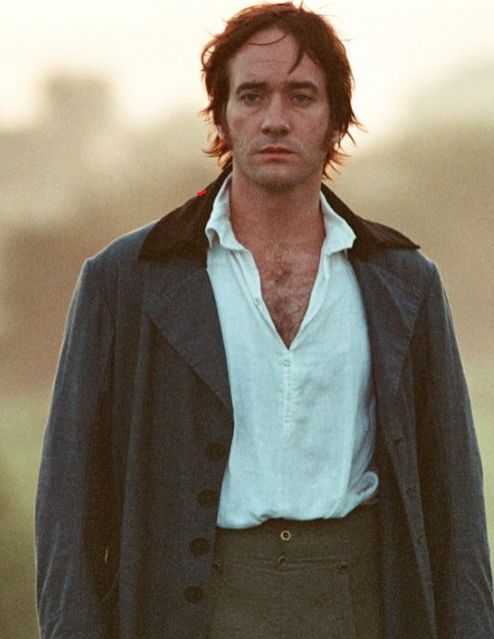
The 2005 Mr. Darcy [Matthew Mcfadyen] is the best of all the other men who tried to play the complex character of Mr. Darcy. The plot of the movie is the delicate interplay between Lizzie and Darcy. Both Keira Knightley and Matthew Mcfadyen are masterful in this movie.
From the very beginning, we sense that Elizabeth and Darcy need to get together, but during most of the movie, that does not seem to be a possibility. Because the Bennets are not wealthy, the stakes aave five girls of marrying age and no money to attract a worthy suitor.Becre raised. They ha Britishuse of tradition at the time, the Bennet estate would not pass to the Bennet daughters. Instead, it would pass to a male heir and Mr. Collins stood to inherit the Bennet estate. In a perfectly real and believable way, Mr. Collins comes along and offers to marry one of the Bennet girls. He felt that this would help even things out again. When Collins proposes to Elizabeth, we begin to panic. This might be Elizabeth’s only chance. Again, we gasp as she dashes all hope of making a responsible marriage choice of him.
The Perfect Ending.
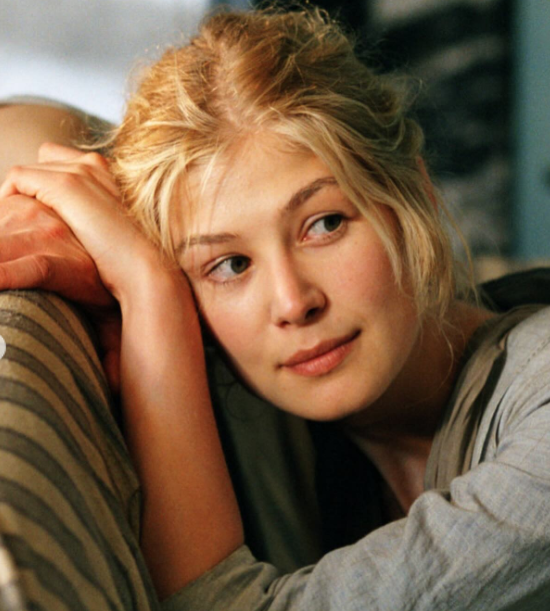
Jane is the oldest Bennet daughter, and she is the essence of beauty, sweetness, and poise.
“I was looking for the opposite of Keira in a way; an actress who could portray the period ideal of what a woman should be, since Jane is hailed as the beauty of the family. Rosamund Pike was simply perfect and is wonderful in the role.” -Joe Wright (P&P Director)
Part Two:
Like children on Christmas Eve, five hopeful, young ladies go to a dance where a possible suitor might be present, and the merriment begins.
This movie is a celebration.
My only complaint with 2005 is that Mary is almost nonexistent in the story. In several scenes it seems that there are only 4 Bennet siters, but there are five, The fifth sister is Mary, who is a wallflower. In the following passage, Mary is described as an untalented, tedious bore who occasionally tries to become more visible:
“… [Mary’s sister] was eagerly succeeded at the instrument by her sister Mary, who having, in consequence of being the only plain one in the family, worked hard for knowledge and accomplishments, was always impatient for display.
“Mary had neither genius nor taste; and though vanity had given her application, it had given her likewise a pedantic air and conceited manner, which would have injured a higher degree of excellence than she had reached. Elizabeth, easy and unaffected, had been listened to with much more pleasure, though not playing half so well….”
Discover more from Jacki Kellum
Subscribe to get the latest posts sent to your email.