If I were forced to choose a favorite color for flowers, it would be lavender blue. The lavender is a complement to the yellow sunflowers, tall marigolds, and black-eyed Susans in my yard, But I also love lavender blues with the pinks of my roses.
I have always planted one blue sage or another, but it seems that Victoria Blue Salvia farinacea might be a plant that will return to my garden in Zone 8a in Mississippi.
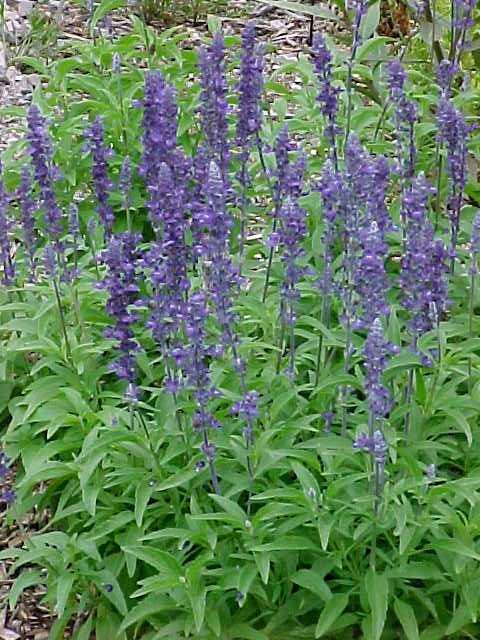
Salvia farinacea ‘Victoria Blue’
Mealycup Sage
Image Credit: Missouri Botanical
Height: 1.00 to 3.00 feet
Spread: 1.00 to 2.00 feet
Bloom Time: May to frost
Bloom Description: Violet blue
Sun: Full sun to part shade
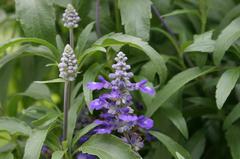
Image Credit: Missouri Botanical
Because a white, powdery substance collects on the tops of the plants, Salvia farinacea is also called Mealycup Sage,
“Grow mealycup sage in full sun to partial shade. It adapts well to nearly all types of soils (including heavy clay and sandy soils), and although it prefers good moisture levels, it is fairly drought tolerant once established. It will be weak and leggy in wet soils. Plants can be sheared back to promote a more compact plant, but this will delay flowering for several weeks. This plant has few problems other than aphids and powdery mildew in our climate, and is not attractive to deer.
“Mealycup sage is easily propagated from seed, and self-sows in my Wisconsin garden, but not excessively, with plants starting to bloom by late summer if allowed to grow on their own. Seeds can be collected by bagging the old flower spikes to capture ripening seed. Light is required for germination, so just press the seed into the growing medium rather than covering it. Seeds should germinate in 10-30 days. Sow indoors 8-10 weeks before the average last frost date, and set out plants after the last frost. Plants sown outdoors after last frost may not bloom before the first frost in fall. Plants can also be propagated from softwood cuttings in spring through fall, or overwintered by cutting back and potting up in fall to keep indoors in a bright but cool sunny window.” Wisconson Extension
Discover more from Jacki Kellum
Subscribe to get the latest posts sent to your email.